

Technology Value Analysis
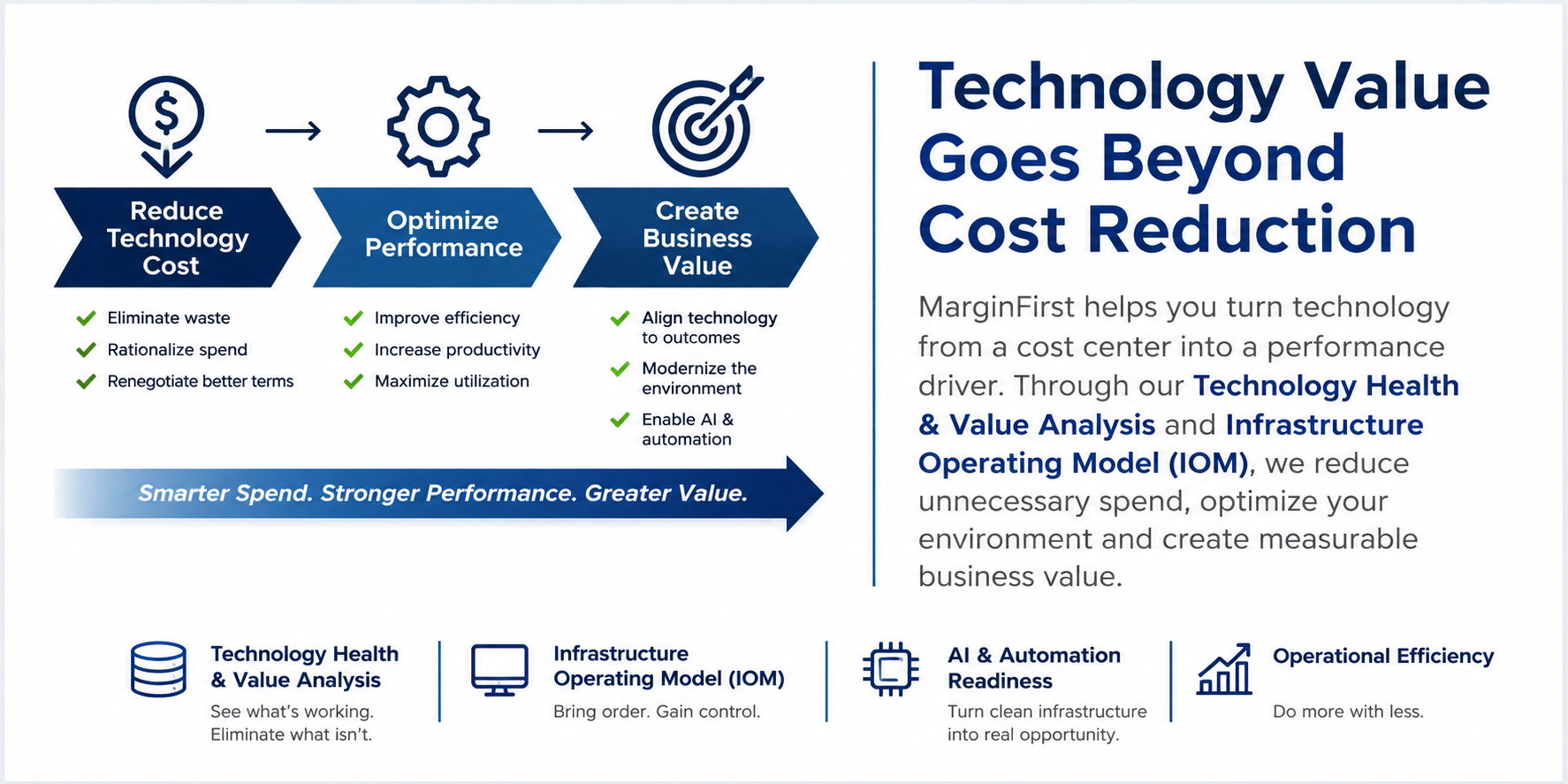
Technology should create business value—not unnecessary cost, complexity or risk.
Is Your Technology Delivering Business Value?
Evaluate technology cost, performance, capability, risk and strategic fit across your organization. MarginFirst helps identify where technology may be costing too much, underperforming, creating unnecessary complexity, or not fully aligned with future business needs.

Signs It May Be Time for a Technology Value Analysis
Organizations often request a Technology Value Analysis when they begin experiencing one or more of the following:
✓ Technology costs continue to increase
✓ Multiple technology vendors become difficult to manage
✓ Security, infrastructure, or reliability concerns are growing
✓ Technology no longer aligns with business objectives
✓ Employees spend significant time on repetitive manual work or moving information between systems
Areas Included in the Technology Value Analysis
A Technology Value Analysis evaluates the technology environment from a business perspective—not just individual products, contracts or vendors. Areas commonly included in the analysis include:
Technology Cost & Vendor Management
✓ Technology spend
✓ Contracts & renewals
✓ Billing accuracy
✓ Vendor performance
✓ Microsoft & software licensing
Infrastructure & Connectivity
✓ Internet & WAN
✓ Cloud
✓ Network
✓ Managed Infrastructure
Security & Business Continuity
✓ Cybersecurity
✓ Identity
✓ Disaster Recovery
✓ Compliance
Innovation & Future Readiness
✓ AI & automation
✓ Repetitive workflow reduction
✓ Collaboration
✓ Scalability
Our Approach
Every Technology Value Analysis follows a structured process designed to align technology decisions with your business objectives.
1. Assess
Understand your business, technology environment and strategic priorities.
2. Evaluate
Identify opportunities to improve cost, performance, vendor alignment and technology value.
3. Optimize
Develop practical recommendations and support informed technology decisions.
Why Organizations Choose MarginFirst
MarginFirst helps organizations make better technology decisions through independent analysis, broad market access and a business-first perspective.
Related Insights
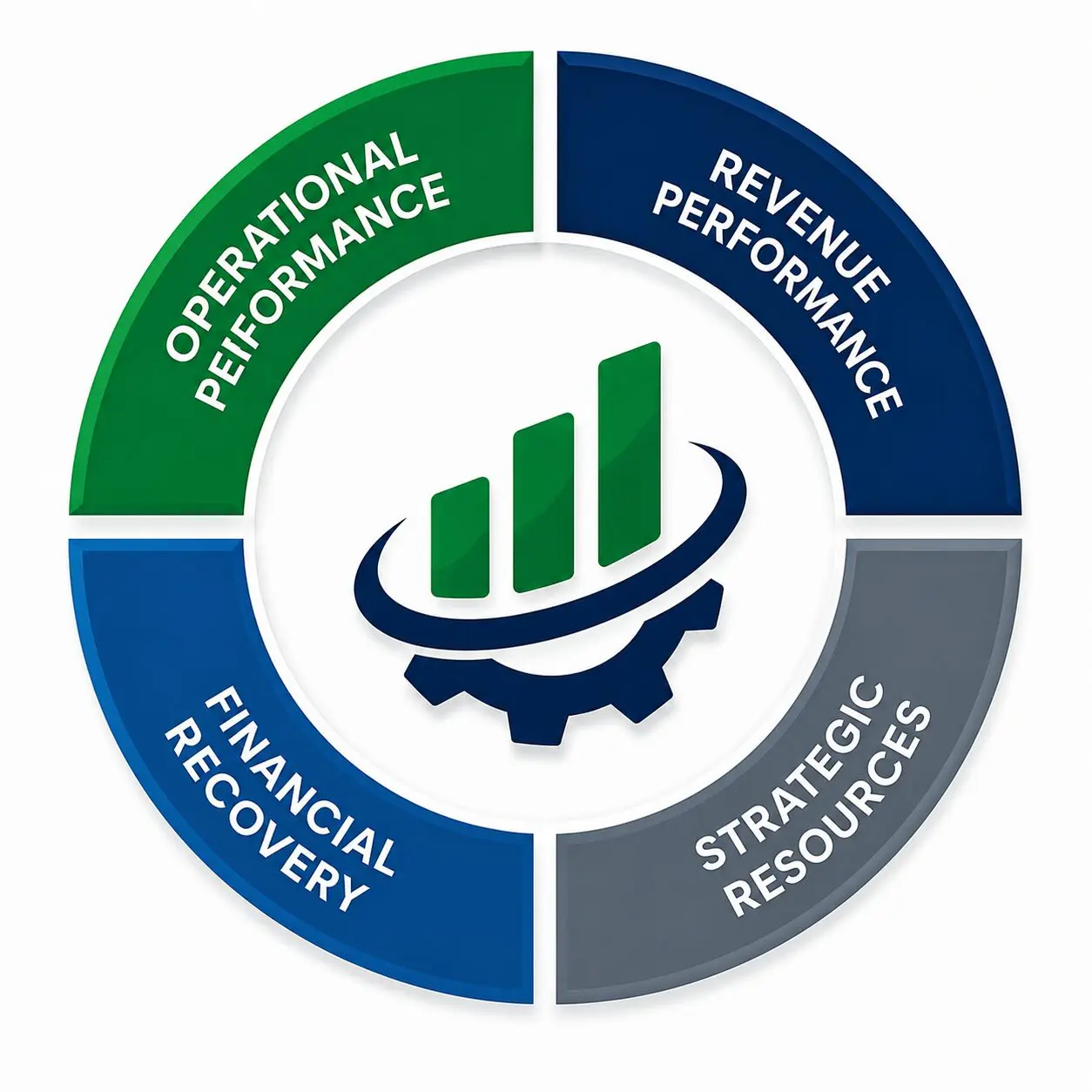
Explore insights on business strategy, operational improvement, AI, financial performance, and specialized resources that help organizations strengthen long-term business performance.
AI Isn't Replacing Consultants
How will AI change the way organizations make decisions, solve problems, and create value?
Read Article -->
The AI Business Challenge
Learn why successful AI initiatives begin with modernizing business processes.
Read Article -->
Tariff Recovery
A $166 Billion Tariff Refund Opportunity Is Emerging. Most Importers Aren’t Ready.
Read Article -->
Looking for Deeper Infrastructure Visibility?
An Infrastructure Operating Model (IOM) creates a structured view of what exists, how it connects, what it costs, and how it should be governed.
Explore Infrastructure Operating Model (IOM) →
Technology Value Analysis FAQs
Get answers to common questions about the Technology Value Analysis, what it includes, and how MarginFirst helps organizations make informed technology decisions.
A Technology Value Analysis is a structured review of your technology environment designed to identify opportunities to improve cost, performance, resilience and long-term business value. The objective is not disruption, but informed technology decisions that better support your organization's business goals.